As we ease ourselves, blinking into the light, out of almost two years of restrictions, we naturally look to reassess where we are and what we do. One thing we can be sure of is that the ‘new normal’ won't be quite the same as the old world. And one area in particular is the world of retail.
A great deal has been written and said on how, why and what might be altered due to the pandemic, but as far as retail goes, evolution, if not revolution, was in the air way before Covid entered our lives. Like so many other factors, the pandemic has increased that speed of change.
Retail brands have been slowly moving to incorporate experiential elements in their stores as they recognise the change in consumer behaviour. There has been a desire, for many years now, to explore greater engagement with a brand beyond the purely traditional transactional relationship. Competing for the emotional connection with consumers is key for brands, and this is where the pivot, if not wholesale change, to experiential is essential. As Alysha Bennett of UK POS puts it, the aim is not necessarily to focus on increasing sales, but instead to engage customers, defy their expectations, and use in-store events to address consumer needs and boost brand loyalty.
The provision of deeper brand experiences will not only meet the increased consumer demand for a more personalised and engaging experience when shopping. In an ever-more online world, people want a more visceral experience when out and about. Experiential retail meets that challenge. But what actually is it?
Experiential retail is best defined, broadly, as a way of engaging customers via interactivity and immersion that can be shared ‘in the moment’ or digitally, thus improving the total in-store experience for shoppers. The purpose is to put the customer at the centre by offering a major uplift of experience within bricks-and-mortar stores from that found online.
Adapt or die
A headline figure of over 17,000 UK retail closures in 2021 (PwC, Industry in Focus) makes for grim reading. The story in the US is similar, with major brands such as Macy’s and Best Buy rationalising their physical retail estate. This is not all the result of Covid-19, but the empty high streets during the pandemic dealt another blow to retailers on top of years of declining footfall. McKinsey & Co argued in 2020 that to remain relevant, retailers should set a North Star to guide their aspirations for customer experience, with specific goals: transform store operations, and reimagine the physical network.
And recent indicators show that a reimagined retail environment really does work, with reports in some areas of store openings beginning to outpace closures.
Much of this revival can be attributed to experiential retail tactics. Kate Shea, Senior Editor, Event Marketer

With post-pandemic customers all over the world likely to be seeking greater physical and emotional engagement after social isolation. 451 Research found almost 50% of consumers planned to immediately start shopping at retail stores once restrictions lifted. Retail winners will be those who offer the best opportunity to meet these demands. Brands that translate their values and product offering into an experience that joins up digital and physical, or ‘phygital’ as it has been described, are likely to build more loyal followers. Bennett again: in a crowded market, immersive shopping experiences can help a brand stand out, and using creative practices early can carve out a USP that stays one step ahead of the competition. Indeed, Boston Consulting Group found in 2018 that brands willing to offer personalised experiences increase revenue two to three times faster than those that do not.
Retailtainment
Examples abound of how retailers are experimenting with experiential retail, from early adopters Nike (Nike Rise) and Vans (House of Vans) to brands as far apart as Marvel and Zara. The phrase ‘bricks and mortar’ doesn’t have to be materially literal: Marvel’s Avengers S.T.A.T.I.O.N. is a mobile store experience that has travelled the globe. Real movie props providing selfie moments, allied with interactive displays, deliver an in-person experience that attracts and excites fans. Another term has been newly minted to describe these marquee retail events: retailtainment. The blend of providing the opportunity to buy whilst being entertained isn’t completely new. But the fresh way in which it is being achieved is.
Take Farfetch’s ‘Augmented Retail Solution’ in London, where there are connected clothing racks, touch-screen-enhanced mirrors and sign-in stations. This ‘intelligent personalisation’ means the RFID-enabled racks are linked to accessible purchase histories and wish-lists, providing sales assistants with greater insight to help their customers, while smart mirrors allow different clothes sizes or alternative products to be requested, and the ability to pay from the dressing room. This all ensures the customer’s ‘phygital’ journey is utterly seamless.
More straightforward, yet still helpful and engaging, solutions can be found with Zara’s ‘Store Mode’ initiative. Using the brand’s app when in-store, shoppers can reserve fitting rooms which are then accessible via QR codes, or scan and purchase items themselves using the ‘Pay&Go’ function.
And keeping the young entertained hasn’t been forgotten by Toys R Us. Interactive ‘activation centres’ zone children by age, interest and category, allowing them to explore worlds while their parents shop. LEGO have similarly developed their ‘Brick Lab’, an experience bringing the surrounding built environment to life with animations, lighting and sound. The space is transformed into a world where participants can meet favourite characters while building their own designs, which can then be scanned to form part of the lab itself. Given the demographic of their main audience and the very nature of their product, LEGO have been early to develop in-store experiences that immerse their customers in a personalised journey, getting them super-connected to the product and brand. Their example is the essence of experiential retail.
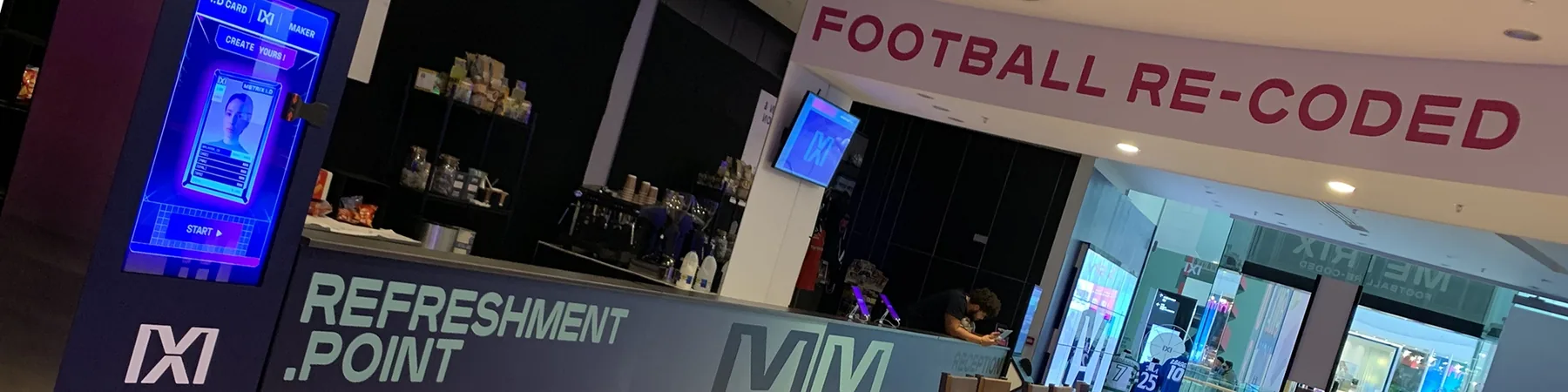
Perhaps these last two examples are apposite when considering experiential retail. New generations are native to certain technologies and expect a particular level of experience. According to UK POS, 52% of millennial spending will be experience-related purchases and, more generally, 59% of consumers expect more than half of all retail space by 2025 will be devoted to experience as opposed to product only, with 75% believing it should happen by 2027 (Sahar Nazir, Retail Gazette, 2020). More importantly, the same survey found an enormous 81% of respondents said they would pay more for experience.
The future is here
So we should conclude that experiential retail is the future. With growth in online sales reaching ever-greater record figures, bricks-and-mortar retail simply has to react. The above shows how it can be done, and how, if it’s done well, it can work. The important thing is to remember that brands and their products rarely live entirely online or only in the physical space. The secret to creating experiences that matter to customers is being able to make both the online and physical journey as one experience. This continuous connection is the way to the future. And the future is here.
Ross McGinn Managing Director, MatterXP
Have you begun planning how your retail format might look? How will your retail offer evolve in order to maximise the new ways customers now expect? If either of these questions resonate, our experiential expertise and interior design experience can help. Should you want any advice, or to discuss how to evolve your retail environment, do not hesitate to get in touch.