There has been a fundamental change in the role of the office. It has shifted from a place where you go to work, to a destination where we collaborate, share and socialise. It has become a brand hub that acts as a focal point for the values, culture and aspirations of a company. As we return to the office, we are seeing design changes that enhance collaboration and prioritise safety.
What will the post-pandemic office look like?
After almost a year of uncertainty and restrictions, we perhaps can now look forward to a future, not so far out of reach, that brings back some of the pre-pandemic normality we took for granted. But what will any so-called “New Normal” look like? Trends that were already in motion in many areas have rapidly accelerated over the last 12 months, and that is certainly true for the office as we (used to) know it.
MatterXP combines architectural expertise with brand translation to create experience-led spatial designs. For us to develop working environments of the future, we have looked at how the office can be re-imagined for a post-pandemic world. This world will need to cater to behavioural and attitudinal changes in the workforce and seek to address productivity and rented floorspace efficiencies. All the while, work environments have to speak to their users in a way that conveys the company’s culture, values and aspirations. It has to continually answer the question: “why am I here?”
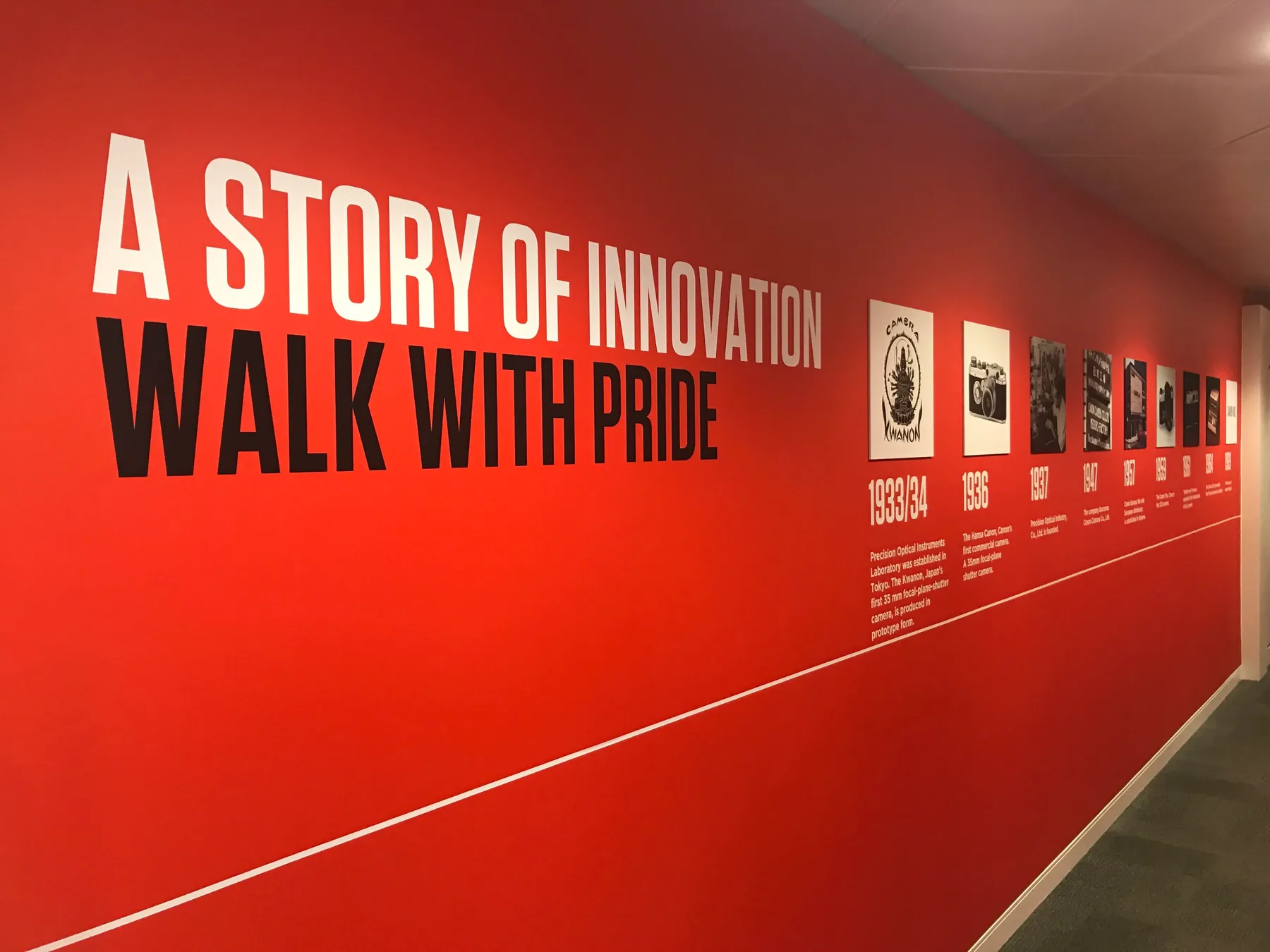
What does it mean for those whose daily or weekly normality was the long or short commute to a large or small office? The office was the destination, the Place Of Work, a place to share ideas, news or simply gossip at the watercooler from 9 to 5 (or much, much longer). Sure, there has been a growing trend over recent decades for working from home, but for full-time remote workers this constituted only 6% of the UK workforce in 2019 (ONS: Coronavirus and homeworking in the UK labour market: 2019). Of course, Covid put paid to that statistic. The majority of the private sector has now real experience of home-working.
And they like it. In August 2020, Microsoft found that 82% of managers expect to have more flexible work-from-home policies after the pandemic is over, while 71% of employees reported a desire to continue working from home at least part-time. Kate Lister, President of Global Workplace Analytics, was recently quoted as predicting that 70 percent of the workforce will work remotely at least five days a month. A Gartner CFO goes further, planning for a 74% shift of employees to remote work after the Covid-19 crisis ends.
This isn’t to say that the Brave New Post-Covid World will see a total shift to remote working. There are downsides to it too. While escaping the commute may be a plus, the old act of leaving the home allowed for an important distinction between work-time and leisure. The 24-hour oppression of being ‘always contactable’ thanks to our smart phones, tablets and laptops had already seen pushback. Now, the convenience of working from home sees people struggle to find a clear division between work and play.
It is also harder for employees, communicating only via email or video-call, to convey to employers their hard work. And, without face-to-face or physical interaction, for employers to identify future leaders within their team. In addition, company culture has been one of the most significantly impacted aspects of businesses, having a subsequent knock-on effect to performance, employee satisfaction and talent retention. While coaching programmes can help to mitigate against this, IPG Mediabrands UK CEO Richard Morris admits that remote working dilutes the care network we all implicitly rely upon, and that creativity is harder when people aren’t physically together.
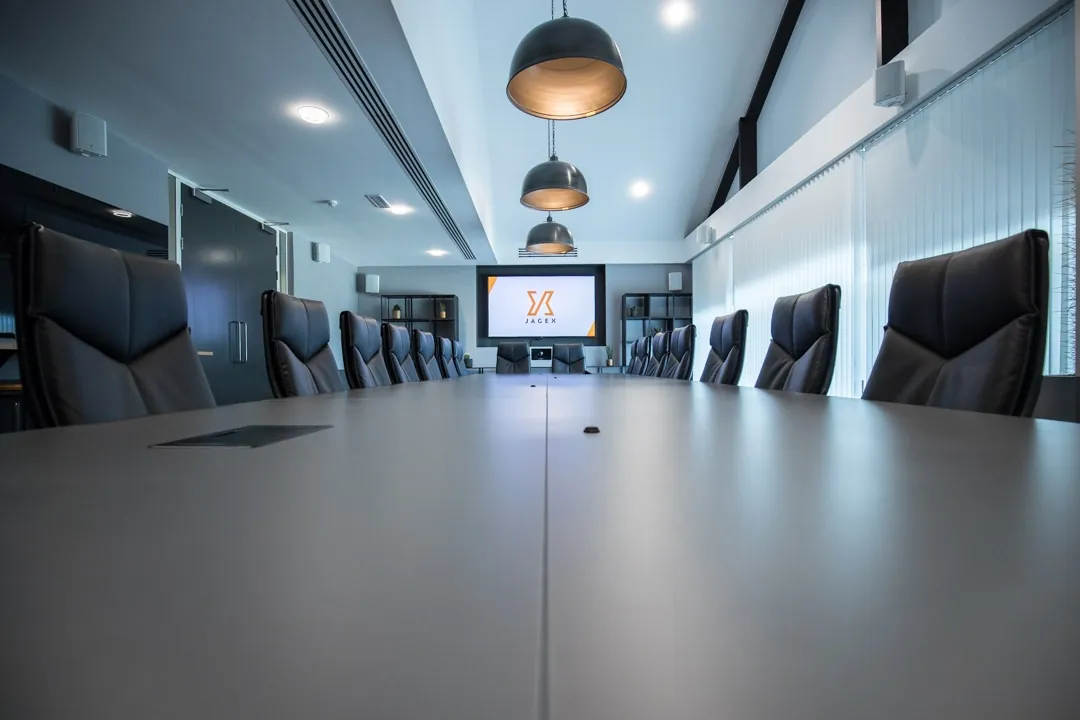
So, with the pressure from employees wanting to work remotely whilst simultaneously demanding structure to their days or weeks and delineating their free-time, businesses will need to match their workforce with the physical requirements of any bricks-and-mortar workplace more efficiently. Alongside this, the all-important spectre of productivity has to be addressed. According to Eric Bradley, Chief Engagement Strategist at ETR, the productivity metric is proving that remote work is working. Which is good news for some, but perhaps not right for all.
All this must point to what Loretta Li-Sevilla, Future Work Department at HP, calls the “hybrid work environment”, a compromise between home and office working. At Unilever they call it “hybrid mode”.
Home has become the place for concentration, workplaces to be places of collaboration. Kate Lister, Global Workplace Analytics
With ever-developing technologies, there is no doubt that remote working is becoming easier and the quality of connectivity and work-sharing even greater. So where does that leave the ‘new’ office?
Efficiency is key: if concentrated work is more productive at home but face-to-face collaboration is often essential, why wouldn’t the workplace be a more flexible space that encourages team meetings rather than solitary work? Reducing individual desks has long been high on the list of easily made savings to any business bottom line. With an analytical approach and considered design, employee satisfaction grows while rent goes down. What’s not to like?
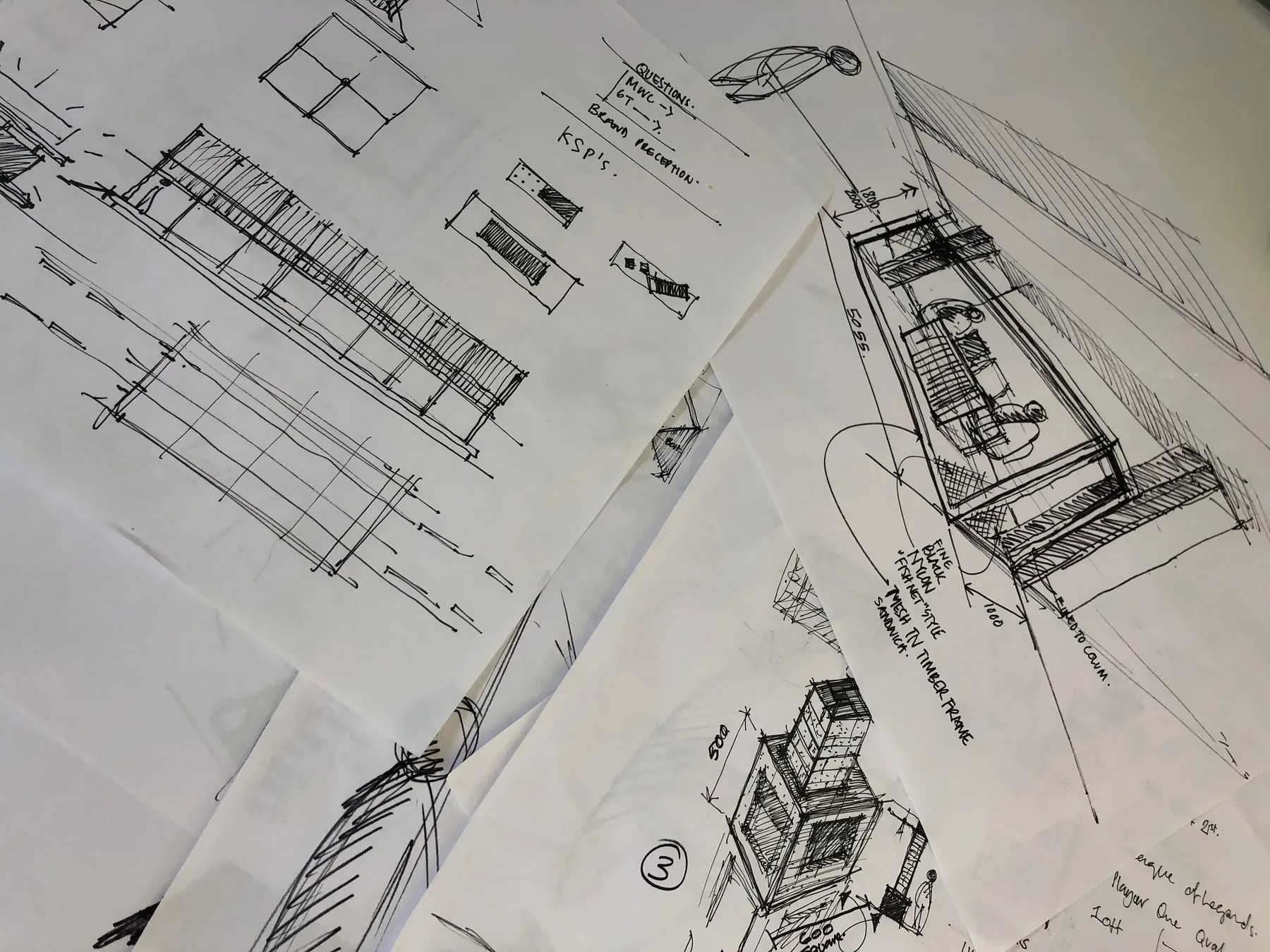
Our team at MatterXP have been involved in architectural office design and developmental theory for many years, and have previously addressed the underappreciated issue of diversity of workspace in the workplace. In this we are in agreement with Karl Preissner, Procter & Gamble’s HR Director of Global Equality and Inclusion, who has said that care for home and family has no gender, and that the company is organising around giving a team a decision of when they work, where they work, and how they’re going to work.
The future workplace will need to cater for more than ‘just’ work needs. During any one day, an employee will have several different tasks. This may well be writing up a report or collaborating on a media strategy. It could also be needing privacy for a call, or even perfecting their downward dog. This can all happen within the workplace, but it requires challenging the traditional use of spatial designation.
The future office will clearly need to be tailored to a business’s particular need. For some this may mean providing fewer workbenches, more hot-desking or greater collaboration areas. Or giving staff a wider variety of food and refreshment, or quiet individual work spaces. It may mean introducing technologies that improve communication, collaboration and presentation. What is in no doubt is that the use of space will need to change.
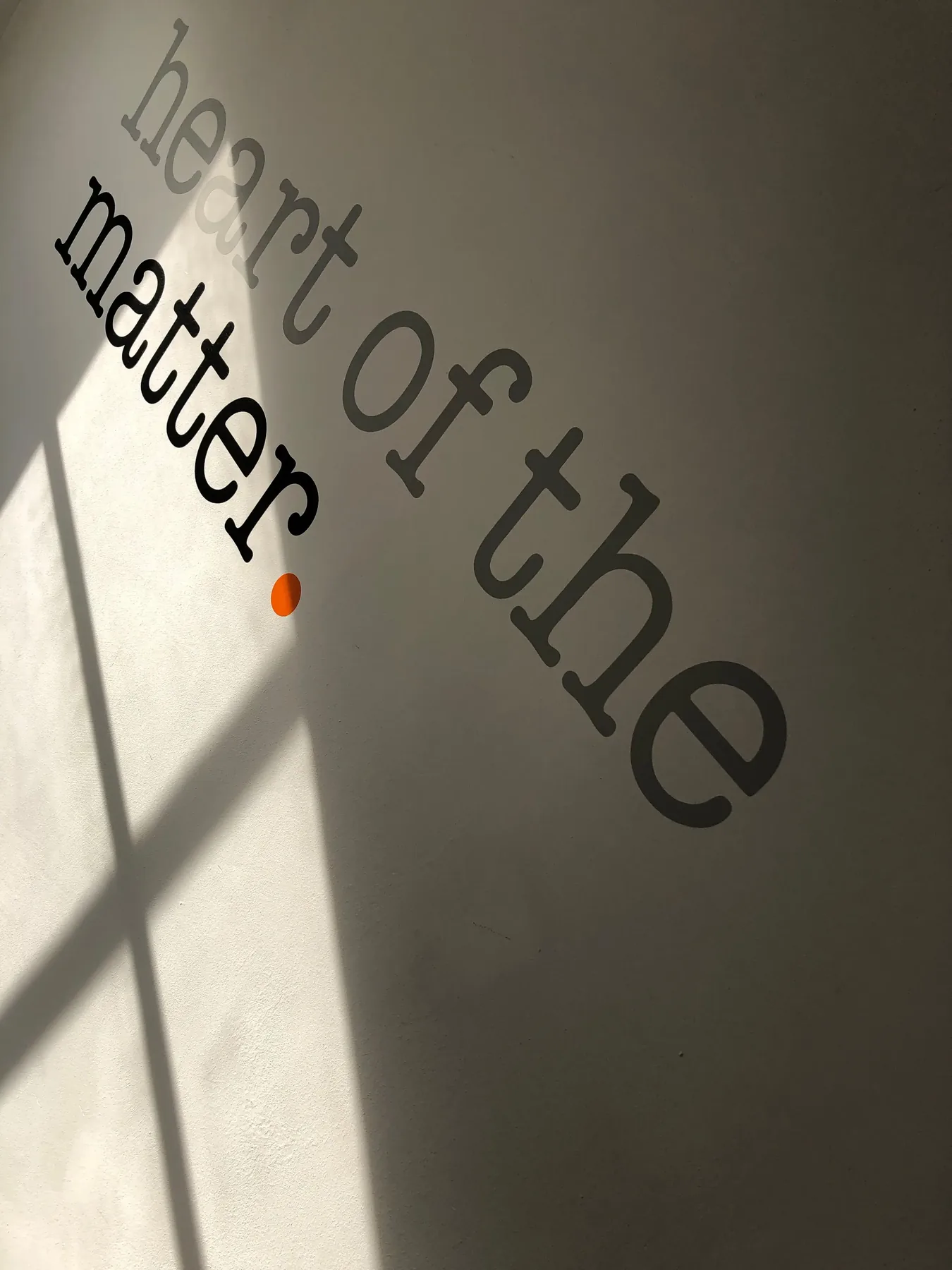
The workplace as a brand hub
It is Brand Experience too that brings the type of creative and design thinking not usually seen in the conventional office setting. Translating a brand’s values and personality, its culture, into an experience is a powerful way of demonstrating the brand as a tangible reality, as opposed to simply providing the usual description via graphics and language. Staff, partners and visitors now want a space that, in its essence and not just décor, offers an experience of the brand and business, something that induces an emotional connection. They want the office to be more than just a place of work; they want it to be a place where they want to be.
This is, as always, a question of culture. Each business has its own, and this culture is intrinsic to its brand. As Morris puts it, the office should be a place of inspiration. A space to come together to create, a watering hole, a space to welcome and delight teams, clients and other partners, a space to celebrate. Applying the tenets of Brand Experience alongside architectural expertise, the workplace becomes a Brand Hub: one that celebrates the brand, its values and culture, and is a place of efficient and productive work.
Now that’s an office that matters.
Our working environments have always evolved, and they will continue to adapt to change. How much they change will depend on the depth of companies’ analysis in how their offices will be used. The secret is to optimise spatial efficiencies while simultaneously bringing brands alive to staff, partners and clients. Get ready for tomorrow’s office.